
Craft spotlight: jute, the golden fibre
Jute is unique to Bangladesh, and to a handful of other regions - nowhere else grows it at this scale. It's sustainable by nature: fast-growing, biodegradable, and long known outside the region mainly as coffee-bag material. In Bangladeshi hands, it's something else entirely.
How it's made
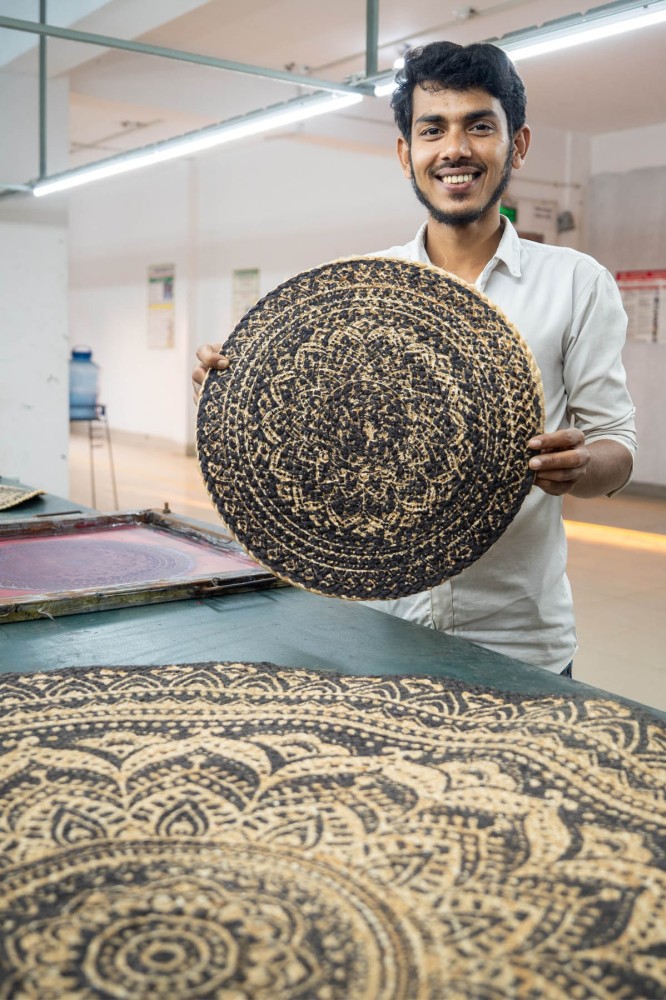
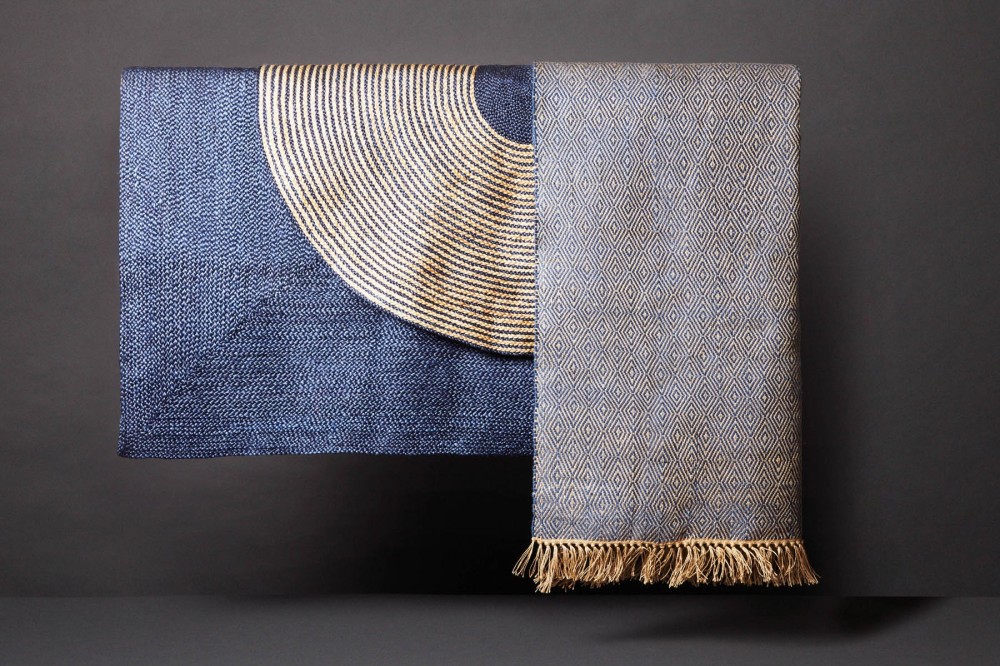
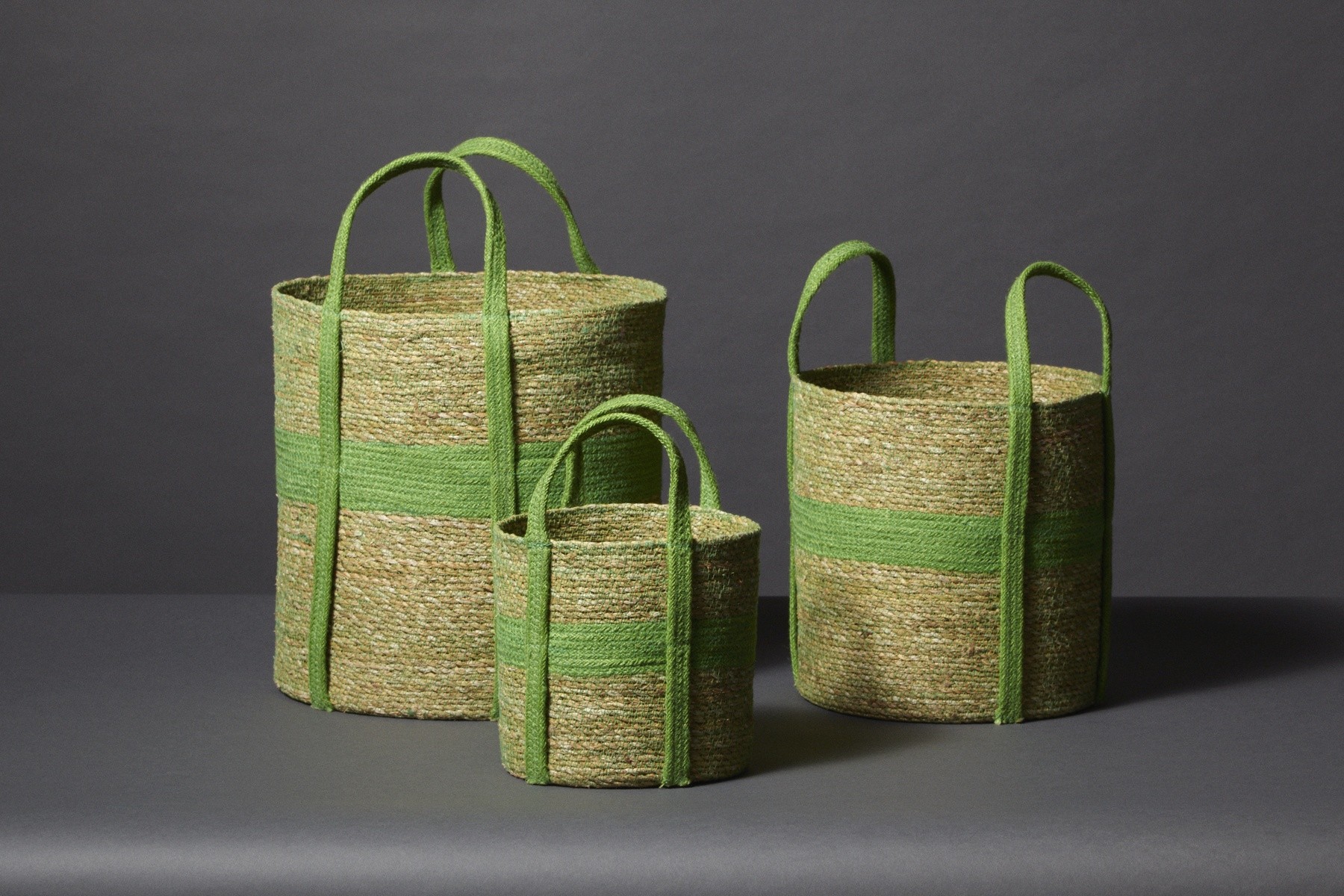
Jute is combined with cotton in several ways. Woven with a cotton warp and jute weft, it becomes a canvas-like material, well suited to bags. Blended into a jute/cotton yarn, it turns softer and linen-like, right for cushion covers . There is even a jute/cotton denim. Woven on its own, jute takes fabulous pattern and is used widely for floor rugs. Cut into strips and sewn with a zigzag stitch, it becomes bakets, bags and placemats. And it lends itself to weaving, knotting and crochet, well beyond the loom.
Where jute is applied
- Floor rugs, woven in pattern
- Baskets and mats, from stitched jute strips
- Bags and coasters, crocheted
Trade specifics
A natural, biodegradable fibre available at real scale - from artisan hand-weaves to production runs suited to a full container. Because it's quite unique to Bangladesh, it's also a straightforward differentiation story for a range: a material your competitors are less likely to already be sourcing.
→ Ask us about jute - we'll connect you with suppliers working in this material.